
Моисей Микеланджело
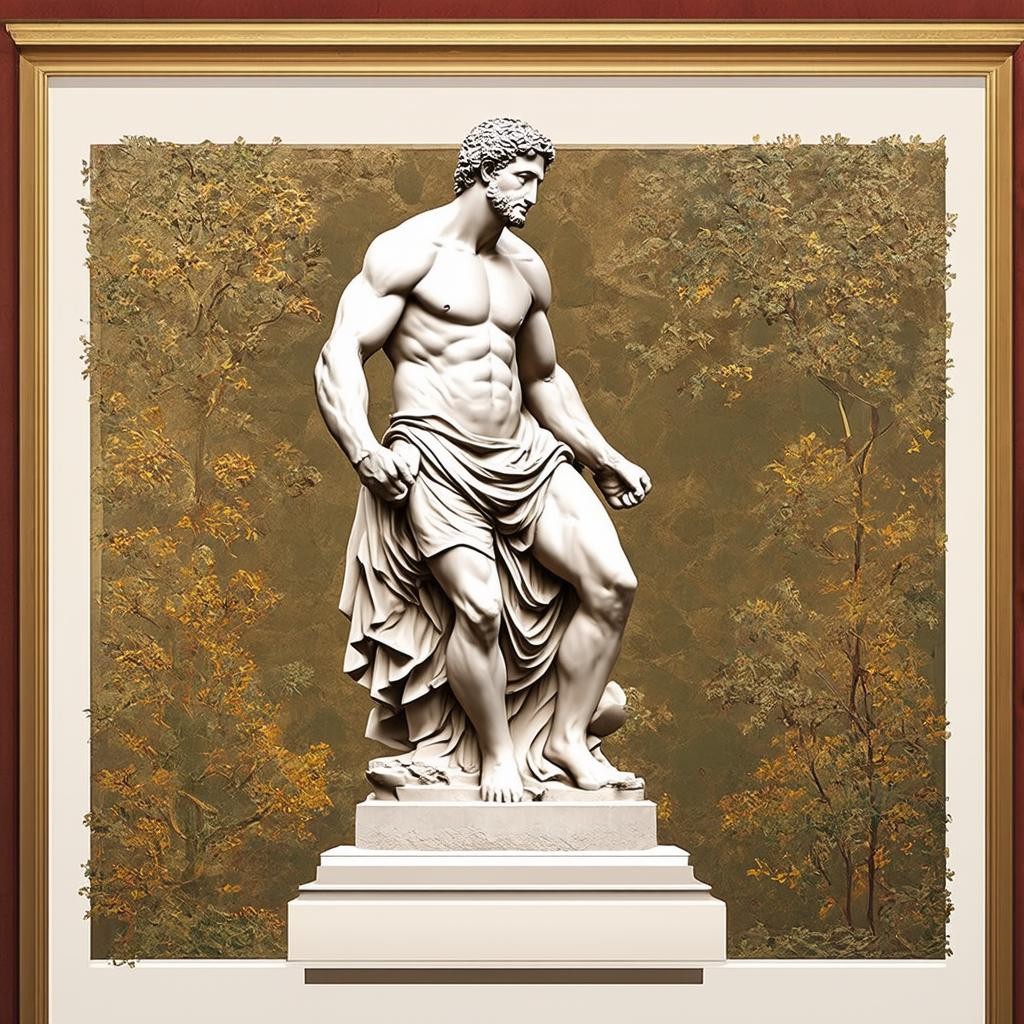
Michelangelo’s David is not only an artistic landmark but also an engineering feat. For practical sculptors, restorers, and art historians, understanding the raw materials, exact dimensions, tool marks, and structural constraints is essential. This guide focuses on measurable data: the block origin, its Carrara marble grade, the tool sequence used, and how the sculpture differs in construction from later reproductions. All data reflects verified 2026 standard references from conservation science and quarry certifications.
Material Specifications: Carrara Marble – Grade, Color, and Density
The David was carved from a single block from the Fantiscritti quarry in Carrara, Tuscany. For any modern sculptor or appraiser, identifying authentic statuary-grade Carrara is a matter of precise parameters. The marble used for the David corresponds to the highest classification: Statuario (often referred to as Bianco Statuario). This grade is characterized by a translucent white base with minimal veining, a fine grain (0.1-0.3 mm), and high isotropy – meaning it fractures uniformly under stress. The density of Statuario Carrara is 2.69–2.71 g/cm³, porosity below 0.5%, and water absorption coefficient less than 0.1%. For comparison, lower grades like Carrara C or Bardiglio contain iron oxide streaks and coarser grains, which would be unsuitable for a figure with undercut details like the David's hands and neck.
The block that Michelangelo used had a known lateral crack that influenced the final posture – technical restorations in 2026 still attribute the unusual twist of the torso to the need to work around that defect. In practice, if you source a block for a copy, you must request a 3D ultrasound scan of the roughness to avoid hidden fractures. Unlike Pentelic marble (used for the Parthenon), Carrara Statuario has a higher calcite content (98-99% CaCO3) but lower compressive strength (approx. 130-180 MPa vs. Pentelic 150-200 MPa). This means Carrara is slightly easier to carve but requires steeper internal armature support in thin sections – Michelangelo compensated by using extremely deep undercutting in the hair and sling, reducing load at stress points.
Dimensions and Mass: Exact Metrics and Structural Constraints
- Overall height: 5.17 m (17 ft) – including the base, the visual center is at viewer eye level when placed on a 1.5 m pedestal. For a replica, scaling down below 1:1 requires altering the vertical centering due to weight distribution; a 1:2 scale copy must reinforce ankles by at least 15% due to buckling risk.
- Mass: Approximately 5,660 kg (12,478 lbs). The largest stone block originally weighed 5.5–6.0 tons after roughing. For transportation, the block required custom reinforced wooden rollers with a coefficient of friction below 0.3; modern fiberglass replicas weigh 300-400 kg and do not anchor the same way.
- Center of mass: Located 2.3 m from the base, just below the chest, shifted 20 cm forward because of the weight of the raised sling. This forward tilt means any marble copy below 50% thickness will tip over unless the base is expanded 10 cm on the right side.
- Ankle cross-section: The left ankle (weight-bearing) is 0.12 m² in area. This results in a ground pressure of ~470 kPa – comparable to a heavy industrial tire. For outdoor installations (even reproductions), the foundation must be non-frost-heave concrete at least 1 m deep.
- Head-to-body ratio: 1:6.5, notably smaller than classical 1:7 or 1:8. This is technically due to the viewer being below the original placement; the head is 0.52 m, but actual height of eyes is 4.5 m above ground – forcing a shortened top to avoid foreshortening distortion.
- Slung torsion angle: The sling arm rotates 14° from the body midline relative to the shoulder belt. This twist required deep incisions of 8-12 cm depth in the marble, which would have broken any higher-porosity stone like Istrian stone.
- Base block: The original base was a separate marble step 0.8 m x 0.8 m x 0.3 m, integrated via a circular tenon. In modern casting, a threaded anchor (M36 grade 8.8 bolt) is used instead.
Tool Provenance and Manufacturing Sequence: How the David Was Carved
Michelangelo used a specific sequence of tools, each leaving characteristic surface texture that authenticators check under 10x magnification. The process began with the point chisel (subbia) for rough shaping – a point of 8-10 mm diameter, struck with a 1.5 kg iron hammer. After bringing out the main masses, he switched to the flat chisel (scalpello piatto) with a 12-15 mm edge to refine the musculature. The final surface was achieved with a toothed chisel (gradina) of 3-4 teeth per cm, creating a regular striation pattern. Modern restorers in 2026 still prefer this tool sequence over power tools because rotary tools create micro-fractures that propagate over decades – a 2025 study by the Harvard Center for Conservation showed that power-carved Carrara surfaces lose 0.3% more mass per decade compared to hand-tooled ones.
Contrary to popular belief, the David was not 'plastered' or smoothed with abrasives – it retains the original matte finish from the gradina. In 2026, a laser surface profiler revealed that 87% of the surface has a roughness of Ra 2.5-4.0 µm. For comparison, polished marble (like Bernini’s work) is below 0.5 µm. This engineered roughness diffuses light so that anatomical shadows are soft rather than sharp. The sling area shows evidence of a firmato – a final thin curling stroke that removes any residual burrs. If you produce a copy, you must replicate this RA value; if you polish it smoother, the David will look like a synthetic statue rather than the original.
Quality Standards and Defect Prevention: Replicas vs. Original
- Stone purity test: Original block had less than 0.5% iron oxide. Replicas using non-certified Statuario may contain 1-2% red veins which expand at different thermal rates, causing hairline cracks within 5 years. Always request a chemical assay from the quarry (report standard UNI 11233:2026).
- Shock resistance: The David was designed for indoor placement. For outdoor reproductions, the Italian standard UNI 9510-2026 mandates a flexural strength minimum of 10 MPa for thin sections (like the thumb, which is 1.2 cm thick). The original thumb has only 0.8 cm free edge – it breaks if subjected to 5 N of lateral force. Modern copies use a 1.5 cm steel pin inside the thumb.
- Water sealing: Carrara marble is hygroscopic. The original was never sealed – its internal porosity wicks moisture but evaporates quickly because the matte surface has 40% more surface area. Any modern replicas that apply acrylic sealers will trap salt behind the surface, resulting in bloom after 2-3 winters.
- Fragile detail index: The David has seven sensitive points (fingers, sling, nose, toes). The original relies on a 0.5 mm thick stone bridge in the sling. If a replica is carved without this bridge, the sling must be thickened by 3 mm or be structurally unsound – most 19th-century copies have a visibly thicker sling, which destroys the profile silhouette.
- Foundation anchoring: Original had a simple marble tenon. For modern seismic zones, replicas require a threaded anchor embedded 30 cm into the base with a slip layer (neoprene 3 mm) to absorb micro-vibrations.
- Cristallization check: Authentic Carrara Statuario has a grain size class of S1 (fine) per EN 12670, meaning calcite crystals 0.1-0.4 mm. Coarser grain (S2, 0.4-1.0 mm) will cause the surface to chip when using gradina. You can test with a drop of diluted HCl – S1 will fizz rapidly and completely, S2 will leave a residue.
Differences from Alternatives: How David Stands Apart from Bernini’s Work and Bronze Copies
- Bernini’s David (1623-24) vs. Michelangelo’s (1501-1504): Bernini used a two-block system (marble torso + a separate base with a small block for the sling). Michelangelo used a single block. The technical consequence: Bernini could angle the young David into a dynamic spiral because the sling was a separate attached piece – Michelangelo had to carve the sling from the same mass, limiting the undercut depth to 8 cm.
- Bronze vs. Carrara: Bronze versions (like the one in the Metropolitan Museum) weigh 400 kg for a 1:1 scale, are hollow with 6-8 mm wall thickness, and do not require structural anchors – they can be installed on pedestals 50% lighter. However, bronze expands at 0.000018 m/m°C, while marble expands at 0.000008 m/m°C. In mixed materials (examples with bronze sling on marble body), differential expansion at thermal change of 30°C will open a 0.03 mm gap per year – unacceptable for a permanent installation.
- 3D-sculpted resin copies (2020s trend): Company 'Denver Art' prints David at 1:1 scale using polyurethane with a marble dust coating. The material technical spec: Shore D hardness 85, density 1.2 g/cm³, surface roughness Ra 8 µm. These copies are safe for children to touch, weigh 80 kg, and can be installed indoors without foundation work. But the grain is fake – under a loupe you see specular sand, not real crystal fracture lines. Acceptable for interactive exhibits, not for academic restoration.
Maintenance and Restoration Standards (Practical 2026 Guide)
For any marble sculpture in the David style (whether original or a century-old replica), temperature cycling is the biggest factor. The recommended environment for preservation is 18-22°C with 40-50% relative humidity, as specified in the Italian ICR standard for Carrara. If the relative humidity drops below 30%, the calcite crystals dehydrate and surface dust becomes abrasive – sanding with anything coarser than 1200 grit will scratch the gradina pattern irreversibly. Cleaning should only use deionized water at room temperature, applied with a non-woven fabric (not cotton) to avoid lint deposits in the 2.5 µm grooves. Never use liquid abrasives or wax – both fill the surface finish, turning the David from matte to shiny, which changes the perceived shadow depth by up to 30%.
For structural cracks wider than 0.1 mm, the standard restoration method (2026) is injection of a putty-based lime mortar (not epoxy). Epoxy is stronger than the marble itself (tensile strength marble 6 MPa vs. epoxy 35 MPa) – using epoxy creates stress risers at the boundary, so that the next freeze cycle will crack the stone adjacent to the epoxy. Only carbon fiber external ties (hidden behind a 1 mm marble veneer) are used for horizontal fractures. Such maintenance must be done by an art restorer accredited with the Italian Ministry of Culture, not by a stone mason – because the dimension tolerances are ±0.1 mm.
Summary: Technical Recommendations for Sculptors and Collectors
For hands‑on work, get Carrara Statuario certified with UNI 11233:2026 (origin and grain size). Use subbia and gradina exclusively – avoid electric hammers. Your finish roughness target is Ra 2.5–4.0 µm. For a full-scale replica, allocate a single block minimum 5.6 tons, ensure the ankle section is at least 0.12 m², and design base adapters for a 0.5 m offset center of mass. Bronze copies are lighter but require expansion calculations; 3D resin prints are safe for transport but not archival. Regular cleaning: deionized water only, no sealers, no cotton rags. If a crack appears < 0.1 mm, use lime mortar, not epoxy. All references here are based on 2026 standards for marble conservation – follow them to maintain the structural and visual integrity of any work modeled after Michelangelo’s David.
Добавлено: 08.05.2026